In Britain, especially in London, there are two common ways to take a taxi: hail a black cab in the street or book a minicab through an app such as Uber or Bolt. Both have advantages and disadvantages, so it helps to know when each one suits you better.
Features and advantages of black cabs
Black cabs are best known in London, where they can be any colour. Elsewhere, taxis are licensed by the local council and may be ordinary cars. The points below are mainly about London.
- Trained drivers. In London, black cab drivers must pass the Knowledge of London. Green-badge drivers can work anywhere in London; yellow-badge drivers work in a suburban sector.
- No booking needed. You can hail a black cab in the street or take one from a rank.
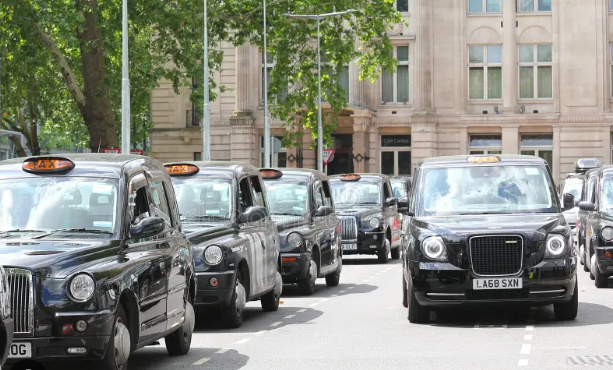
- Safety. All licensed drivers have passed background checks. Some councils also require CCTV in licensed vehicles, but most do not.
- Accessibility and luggage. In London, all black cabs are wheelchair accessible and there is no extra charge for luggage.
There are drawbacks too. Black cabs can cost more than a pre-booked minicab, particularly at night and at weekends. Black cab fares are metered, so the final price depends on time and distance. TfL publishes typical fares, and you can agree a fare with the driver before the journey starts. In the suburbs, taxis to hail can be scarce, so booking may be easier.
Minicab apps (Uber, Bolt)
Apps such as Uber and Bolt book private hire vehicles (minicabs). They are the main alternative to black cabs and offer some different features.
- Convenience and a price up front. Enter the pick-up point and destination, and the app shows a price before you confirm. You can usually choose the class of car, which also affects the cost.
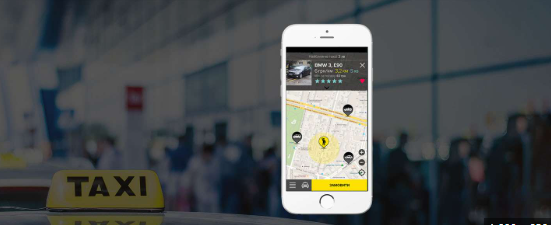
- Price. App-booked minicabs are often cheaper than a black cab, but app prices rise when demand is high, so compare before you book.
- Availability. In suburbs and small towns, taxis to hail can be scarce, so booking through an app or a local licensed operator is often easier.
- Trip details and tracking. The app shows the driver, the car and the route, and passengers can share their trip with friends or family.
Besides Uber and Bolt, you can book through other services, such as FREENOW and local licensed operators.
Black cab or app: which to choose in which situations?
First, the key rule. Only licensed taxis (black cabs in London) can be hailed in the street or taken from a rank. Minicabs, including cars booked through Uber or Bolt, must be pre-booked. Never get into a minicab you have not booked.
Hailing a black cab can be convenient:
- in central London or near major attractions, where black cabs pass often and there are taxi ranks;
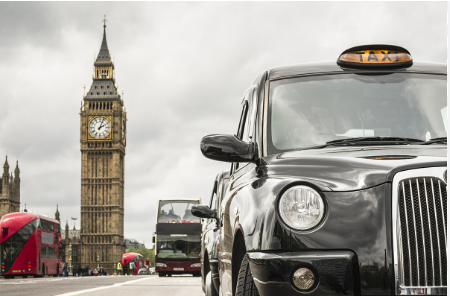
- when travelling with luggage or a wheelchair user in London (all black cabs are wheelchair accessible, with no extra charge for luggage);
- when you have no mobile data (hail a taxi or go to a rank, give the address and set off);
- in the evening or at night (a licensed taxi from a rank or hailed in the street is a safe option; a minicab must always be booked).
An app is often the better choice:
- in the suburbs (where taxis to hail are scarce);
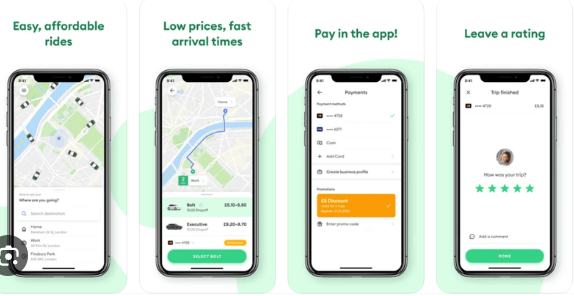
- when you want to know the price before you travel (check whether it is fixed or an estimate);
- for long or intercity trips (you can choose the class of car and compare prices).
If you are travelling as a group, some apps, such as Uber, let you split the fare with other riders.
Both options have their place, and many people use both depending on the situation. Whichever you choose, only get into a minicab you have booked.
Sources
- TfL: What to expect from your journey
- TfL: Taxi fares
- TfL: Learn the Knowledge of London
- TfL: Book a taxi
- TfL: Safer travel at night
- GOV.UK: Taxi and private hire vehicle driver licence
- GOV.UK: Statutory taxi and private hire vehicle standards
- Uber Help: Will surge pricing be included in the upfront fare?
- Uber Help: Splitting a fare with a friend